Knowledge hub
English for Kids in Morocco: When Should They Start?
Moroccan children already grow up between Arabic, Amazigh and French. Adding English is easier than most parents expect — provided the classes are built for their age and not a shrunken adult course.
Written and reviewed by Mourade Boulanouar
Founder & Head of Teaching, Englify · Last reviewed September 2026
In short
Children in Morocco can start structured English classes from about 4 years old, as long as the sessions are short, playful and led by a teacher trained for young learners. From 8 to 12 progress is usually fastest, because children still pick up pronunciation easily and can now follow a syllabus. Englify teaches children from 4 to 15 in small live online groups formed by age band and level, and the first class and level check are free.
Key takeaways
- Structured classes work from around age 4, with short, playful sessions
- Ages 8–12 is usually the fastest phase of progress
- Growing up with Darija, Arabic and French is an advantage, not a risk
- Sessions should be small, active and speaking-first, 30–60 minutes by age
- Englify groups children by age band (4–7, 8–11, 12–15) and level
- First class and level assessment are free, no card required
The short answer on age
Children can start structured English classes from around age 4, provided the session is short, visual and playful — songs, images, first words and lots of repetition, not grammar. From about 8, once reading and writing are comfortable in another language, lessons can add reading, writing and school vocabulary. Between 8 and 12 progress is often fastest: children still absorb pronunciation easily and can now follow a syllabus.
Growing up multilingual is an advantage
Parents often worry that a fourth language will confuse a child. In practice, children who already switch between Darija, Standard Arabic and French are used to separating language systems, and they transfer reading and learning strategies to English quickly. The main thing to protect is enjoyment: a child who dreads the class stops learning.
What a good kids' class looks like
A children's class should be short, active and visual, with speaking from the very first session. Grammar terminology comes much later than it does with adults.
- Small groups so every child speaks in every session
- 30 to 60 minutes, depending on age and concentration span
- Games, stories and role-play rather than long grammar explanations
- A teacher who corrects gently and rewards attempts, not only correct answers
- Regular reports to parents so you can see progress, not just attendance
How to support English at home without teaching
You do not need to speak English yourself to help. What helps most is consistent, low-pressure exposure between classes.
- Cartoons and children's series in English with English subtitles
- Ten minutes of reading aloud in English, three times a week
- Ask your child to teach you what they learned — explaining consolidates it
- Praise effort and fluency; leave error correction to the teacher
Start with a free trial class
Take a free level test, meet an Englify teacher and get an honest assessment of your English level — with no commitment.
What to expect in the first year
In the first year of regular classes, a beginner child typically reaches confident basic conversation: greetings, family, school, hobbies, likes and dislikes, present and past of common verbs. Pronunciation is usually the fastest visible gain and the one adults find hardest to acquire later.
Teenagers are a different case
From 12 upwards, motivation and school results matter more, and the class should connect to the school syllabus, exams and speaking confidence in front of peers. We run those groups separately from the younger children.
What parents say about Englify
Real messages from parents of Englify students, kept in the language they were written in.
Mon fils adore ses cours avec Englify. Il est devenu beaucoup plus confiant lorsqu'il parle anglais.
Sara — Casablanca
Ma fille a fait beaucoup de progrès depuis qu'elle a commencé avec Englify. Je suis très satisfaite de son évolution.
Nadia — Rabat
Une très belle expérience pour mon fils. Les cours sont amusants et il apprend beaucoup de nouvelles choses.
Imane — Tanger
J'étais hésitante au début concernant les cours en ligne, mais ma fille est maintenant très motivée et progresse bien.
Yasmine — Marrakech
Les professeurs sont très patients avec les enfants. Mon fils se sent à l'aise et participe beaucoup pendant les cours.
Khadija — Fès
Ma fille attend toujours ses cours avec impatience. Elle apprend l'anglais tout en s'amusant.
Salma — Agadir
Frequently asked questions
- Is my child too young at 4 or 5?
- No. We accept children from 4 years old, in short, play-based sessions with a teacher trained for that age. Reading and writing come later, from around 8.
- Will English hurt my child's French or Arabic?
- No. Research on multilingual children consistently shows no lasting cost to the other languages, and children in Morocco are already used to switching between languages daily.
- Can children learn English in online classes?
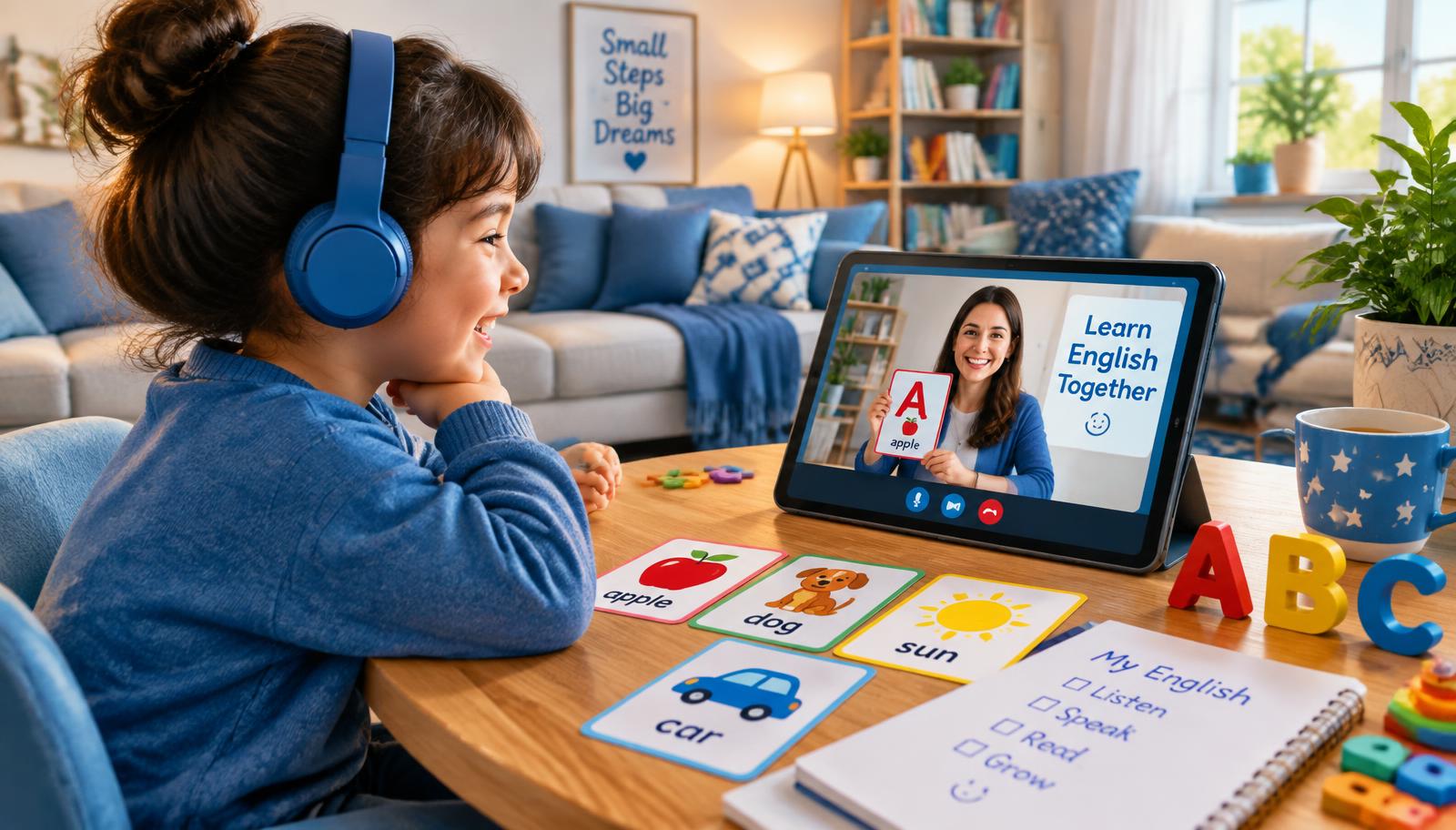
- Yes, in small groups with a teacher who keeps them speaking and uses visual material. Very young children do better with a shorter session and a parent nearby for the first few classes.
- How do I know the class is working?
- Ask for progress information, not just attendance. Our parents get session reports, quiz results and an end-of-level assessment before the child moves up.
- How much do English lessons cost in Morocco?
- At Englify, small-group online English classes are the most affordable option and private one-to-one classes cost more per hour, because a private teacher works with one student only. Current group and private prices are confirmed on WhatsApp (+212 724 744 137) and on our prices page, since they depend on the format, the number of hours per week and the length of the plan. The trial class is free and no card is required.
Mourade Boulanouar
Founder & Head of Teaching, Englify
Founder of Englify Online Academy. He designs the teaching method used in every Englify class and reviews each guide in this knowledge hub.
More about EnglifyKeep reading
Explore more
- English for KidsBook a free trial
- English for TeenagersBook a free trial
- English Classes for Kids in CasablancaBook a free trial
- How We TeachBook a free trial
- All English learning guidesBook a free trial
- Cambly review, from a Morocco-based academyBook a free trial
- Online English learning in Morocco: the numbersBook a free trial
Start with a free trial class
Take a free level test, meet an Englify teacher and get an honest assessment of your English level — with no commitment.
Free trial · No card required · Teachers speak English, French & Darija